
About This Game
1
Login to like
1
Login to like
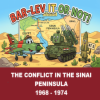
What is Bar-Lev It Or Not!? Bar-Lev It Or Not! is a Strategy browser game you can play instantly online with no downloads. Experience strategic thinking and tactical decision-making.
THE CONFLICT IN THE SINAI PENINSULA 1968 - 1974
In this game, you play as Egypt in the wake of the 1967 Six-Day War. You must restore Egyptian sovereignty over the Suez Canal and Sinai Peninsula through some combination of military, diplomatic, and economic measures. The mix of war and diplomacy is up to you, but overcoming Israeli air superiority is your first challenge. To succeed, you must also figure out how to avoid a military coup, maintain ties to Arab allies, and protect Egypt's infrastructure from Israeli air strikes. The Soviets are willing to help with weapons and advisors, and you will need to use this aid to offset the dire state of the Egyptian military and economy. However, Soviet aid comes with a significant loss of Egyptian autonomy, so use your MiG-21s wisely!
This game covers two different conflicts: The War of Attrition that started immediately after the Six-Day War and the 1973 Yom Kippur War. While both of these conflicts involved multiple Arab countries, this game only covers war and diplomacy between Egypt and Israel. That is because Egypt and Israel ultimately went on to forge a lasting peace. This game simulates the path to that peace. You play as Egypt because Egypt had a more challenging road to travel. In 1968, Egypt’s economy was on the edge of collapse. Israel also had a technologically advanced military, nuclear weapons, and an alliance with the most powerful nation on earth. You can use your military to try and recover lost territory, but you will likely need to leverage diplomacy to get everything you want.
And peace with Israel is definitely something Egypt should want because a demilitarized Sinai has benefited both countries. Today, Egypt and Israel view their peace treaty as a key pillar of each country’s security. Egypt is the one neighbor that Israel does NOT need to worry about (unlike Syria, Lebanon, or Gaza). For its part, Egypt appreciates Israel’s ability not to collapse into civil war (like Libya and Sudan). Since both countries experience regularly scheduled financial crises, neither side has enough troops or money to properly defend the Sinai from the other side. Both countries have come a long way since their first direct talks held in tents in the desert.
In this game, a total victory for Egypt looks like 1975. By the time Sadat and Begin arrived at Camp David in 1978, Egypt and Israel had abided by a comprehensive ceasefire agreement for three years. This arrangement gave Egypt control of the Suez Canal and access to important Sinai oil fields. The canal and the oil fields were the Egyptian government’s two main sources of revenue. The Sinai II agreement also limited both sides to strict caps on military forces in the Sinai separated by a UN-monitored demilitarized zone. This allowed Israeli reservists to go home to their jobs and families. Put simply, Sinai II kept both the Egyptian and Israeli economies from collapsing.
Egypt’s conduct between 1968 and 1975 helped Israeli society get to a point where Israeli politicians could take a chance on peace. The Egyptians had effectively raised the cost of occupying the Sinai through the War of Attrition and Operation Badr. At the same time, Egypt proved that it could be a reliable negotiating partner. The ceasefire that ended the War of Attrition in 1970 held until the 1973 Yom Kippur War, and Sadat had made good faith efforts to start negotiations before crossing the Suez. The ceasefire that ended the Yom Kippur War helped accelerate the trust-building process. Egyptians and Israelis began to work directly with each other to disengage their two armies. The Egyptians also honored their commitments to the Israelis: Egypt lifted its blockade on Israeli shipping in the Red Sea and allowed Israeli ships to pass through the Suez Canal. The two sides successfully exchanged POWs. Both sides grew to rely on US reconnaissance flights over the Sinai to monitor compliance with ceasefire agreements. The Egyptian officials permitted UN peacekeepers to operate within Egyptian borders and respected their authority. Finally, Egypt could have restarted the war in 1974 but opted for a negotiated solution instead. By 1978, withdrawing from the Sinai looked like a low-risk, high-reward proposition to most Israelis.
With that in mind, here is a description of a few key game elements:
Soviet Aid Units
Soviet Aid units represent weapons systems, intelligence, and logistical support from the USSR and its allies. These are your MiGs and SAMs. You use these units to block enemy cards or to build new capabilities. However, at the end of the game, each Soviet Aid unit that remains on the board will cost you points. This represents Sadat’s strong desire to move Egypt away from dependence on the Soviet Union.
Ports Units
Ports units represent Israel’s ability to access sea lanes of communication. Without deliveries of weapons and oil, the IDF would not be able to function. With over half of Israel’s labor force unavailable to harvest crops or man factories, Israel would also become dependent on food and manufactured goods shipped in from abroad. During the Yom Kippur War, Egypt successfully blockaded the Red Sea. While Israel’s Mediterranean ports remained open throughout the war, cargo volumes dropped dramatically. The Eastern Mediterranean was a war zone, and merchant ships avoided it in the same way they avoided the Straits of Hormouz and the Red Sea during the 2026 Iran conflict.
It does not take a lot to shut down shipping lanes, and Egypt had a lot of options for disrupting maritime commerce. Egypt had a fleet of ten diesel-electric submarines in the Mediterranean that could have torpedoed Israel-bound oil tankers. Egypt could have also used its fleet of TU-16 bombers to hit port facilities with AS-5 Kelt cruise missiles. Egypt’s fleet of missile-armed fast attack craft could replicate the Indian Navy’s success in attacking oil storage facilities with Styx anti-ship missiles. Finally, Egyptian frogmen could (and did!) infiltrate Israeli ports and sink merchant ships with limpet mines.
Generals / Mossad Spies Units
Naser and Sadat needed the loyalty of Egypt’s security services to stay in power and to keep Egypt’s military plans secret. Disgruntled members of Egypt’s security services did spy for Israel and did assassinate Sadat. Your opponent’s ability to move Generals units to their side is a double threat: you can lose your ability to generate secrecy points, and you can also lose control of the Cairo region. Make sure your agents keep an eye on your generals!
Commando Units
Egypt relied extensively on its special forces throughout the War of Attrition and the Yom Kippur War. You can deploy these units by expending Secrecy points (commandos are not very effective if the enemy knows they are coming). Commando units are also removed from the game during the next turn, so they are only useful for a short period of time. Again, this reflects the fact that Commando units are designed to get in, hit hard, and get out quickly. They are not useful for holding territory for long periods of time. That is what Army units are for!
Secrecy Macro Points
These points allow Egypt to carry out operations that require stealth or surprise. During the War of Attrition, Egypt used replicas of aircraft and surface-to-air missiles to confuse Israeli intelligence. Egypt also spent a lot of time and effort confusing Israeli intelligence with frequent army exercises and mobilizations in the run-up to Operation Badr.
Arab Support Macro Points
These points represent diplomatic and economic support from oil-rich, Western-aligned countries like Saudi Arabia. You can trade Arab support points for Western Support points. This feature of the game is designed to simulate the impact of the 1973 oil embargo. The doubling of oil prices made high-intensity mechanized and air operations twice as expensive. For Israel, this would make a prolonged war with Egypt prohibitively expensive and create a keen interest in ending the conflict. Higher oil prices would be especially painful for Israel after the Egyptian Red Sea mine barrages cut off access to the Sinai oil fields that had supplied half of Israel’s oil consumption.
You also get points for any Arab Support points that you still have at the end of the game. This represents Egypt’s need to maintain some kind of support within the Arab and Muslim world. Negotiating directly with Israel did alienate many of Egypt’s allies and citizens: Libya invaded Egypt in 1978, the Arab League expelled Egypt in 1979, and Sadat was assassinated by his own soldiers in 1982. Even a small amount of Arab support would have made life easier for Egypt.
Western Support Macro Points
These points are a numerical representation of Israel and America’s willingness to negotiate with Egypt. You can accumulate these points by exchanging Arab support points, or you can wait for your opponent to play the Stalemate card. Historically, pressure from Arab allies and a lack of progress on the battlefield ultimately brought Israel and the US to the negotiating table.
Stalemate Card
If your opponent cannot use any of its other cards, it must play this card, and you get a Western Support macro point for free! This card is designed to represent the process of Israel becoming more willing to negotiate with Egypt as Israel’s military options became less effective. This happened over the course of the War of Attrition. Bombing the West bank of the Suez Canal did not stop Egyptian artillery fire, and Soviet piloted MiGs started to bleed the Israeli Air Force. Israel eventually agreed to a ceasefire in 1970.
Naval Mines Card
This card is the mechanism through which Egypt actually blocks Israel’s access to the sea. During the conflict, Israel’s navy was very small and lacked anti-submarine warfare capabilities and mine sweepers. Naval mines deployed from submarines would have been the most cost-effective way to obstruct commerce. We know that Egypt deployed large numbers of mines in the Red Sea, and that the US spent months clearing mines after the Yom Kippur War.
To play this card, you do need four Soviet Support units. This represents Egypt’s dependence on its allies to protect Egypt’s own access to the sea. Egypt had lots of options for sinking ships (see above). However, it would likely need help from the Soviet Navy to protect its own shipments of oil from Israeli air attacks. The presence of the Soviet Navy in the Eastern Mediterranean would also deter the US from providing direct naval assistance to Israel. During the Yom Kippur War, both the US and the Soviets deployed large numbers of vessels to the Eastern Mediterranean. After Israel sank a Soviet freighter in Syrian waters, the Soviet navy began behaving aggressively towards US warships. The US became increasingly worried that an accidental clash at sea could start a nuclear war with the Soviet Union. This is one of the factors behind the US and Soviet agreement to implement a UN-backed ceasefire. As always, armies win the war, but navies decide the peace.
Dams Region Code
Cairo has two (D)ams region codes at the start of the game. These codes represent the civilian infrastructure that Egypt depended on to feed its population and keep its economy running. Israel did bomb Egyptian dams during the War of Attrition. Israel also had nuclear weapons that it could have used on Egyptian civilian targets, and did consider using nuclear weapons in 1973. Deterring nuclear and conventional attacks on civilian infrastructure should be your top priority. Doing so requires you to allocate your Soviet Support units judiciously. The Soviet Union originally agreed to send fighters and surface-to-air missile batteries to Egypt after Israeli attacks on civilian infrastructure during the War of Attrition.
Reviews and Comments
Would you like to review this game? Create a free account in less than 1 minute.

.svg)
Random Games
View All
 Mobile
Kill flying sharks and save Earth!
Game goal is to kill as many sharks as possible to protect planet earth...
2
476

 Mobile
60 Second Santa!
Made with the color pallet of a original GameBoy this short little platformer has you saving Christmas as Santa!...
2
457
![In The Void[Prototype]](/cachedImages/1802/5Nmfpe.jpg)
![In The Void[Prototype]](/cachedImages/1802/gyXOCf.png) Mobile
Mobile

 Mobile
Naegi Poker
Experience the best online poker game with Naegi Poker. Join players worldwide in this exciting Texas Holdem experience. Play Now! Show your skills!...
2
2,077
 Mobile
The Pope's Underground
Help the Vatican resist Communism and Fascism in the 1940s...
0
11

Coin Collector Upgrader
Move around with WSAD or arrow keys. Collect coins and earn money. Use the money to buy upgrades!...
1
862







·

Javascript is required to use this site.
Free games for your website WordPress Game Plugin
Publish Game iDev Token Game Database
RSS Feed RSS Feed (With Embed Code)
 Dev Coin Stats Game Stats Post Stats Member Stats Site Stats
Indie Games No Download
|
Games to Play at Work
|
Instant Play Games
|
Indie Games Platform
|
Hidden Indie Games
© 2026 iDev.Games. All rights reserved.
This site uses functional cookies for login and preferences. We also use Cloudflare (security) and PayPal (payments). By using this site, you consent to our use of cookies.
Learn more
Privacy Policy
|
Terms of Service
© 2026 iDev.Games. All rights reserved.
Great game!
Mind expanding! See an old conflict in a new light.